

Of course, eating disorder 101 is “it’s not about the food.” Oh, it seems like it is about the food, and one really good way to irritate a patient in the midst of an eating disorder is often to tell them that, in reality, their eating disorder is not about the food.

I have gotten many a nasty look and deep sigh in response to that one! But I persist on my statement, much to the client’s chagrin.
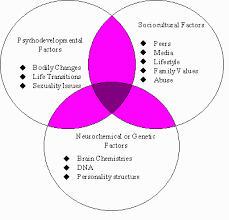
Eating disorder 101, part two, is that very few people will ever know “why” they have an eating disorder. In my 10 years of doing this, and hundreds of patients, I can now say I “know why” a whopping two patients have their eating disorder. For the other hundreds, well, there are just too many reasons. And, reasonably so, most people, and their families want to know why. But, reality is, it is a combination of a number of factors, some genetic and some environmental, and we can almost never identify the why.
So, that leaves us with the present reasons for the ED, what needs the ED meets. And even those are numerous, so today I am going to focus on just one: Eating disorders as a form of communication.

Many individuals with eating disorders struggle to put words to their feelings. Add to that their social isolation and tendency to keep others at a distance, and very rarely will you find an ED patient with a strong social support network with whom they talk openly. They have often lost the ability to walk up to someone and say, “I’m really sad about….,” or “I’m so mad that you…..”
In comes the eating disorder. They can use their body to communicate how they feel. So, as their body size decreases or increases, they might be trying to say something that they cannot find the words for. (Note, this is different than that accusation of eating disorders being “attention-seeking.” Yes, they are hoping someone will notice and help, but this is not the same as simply seeking attention.) On some level, they don’t want to be noticed; they don’t want anyone to recognize they have an ED. But on the other hand, they really want someone to notice, to help. So, they are torn.
I recently had a client come in and flat out admit this was the reason for her behaviors. I was impressed with her level of insight as it made it very clear what we needed to work on in that moment. However, for most, I think they are not even necessarily aware that they are using their body to communicate. I often ask patients what they are wanting someone to hear, and with whom they are trying to communicate. If you are family or friend, you could do a similar thing and ask your loved on what they want you to hear. You may learn a lot.
I also want to point out, I think this whole concept also applies very strongly to self-harm, particularly when wounds are visible to others. Again, this is VERY different from the easy answer of “attention-seeking.” This is a deeper understanding of the person’s internal battles.